
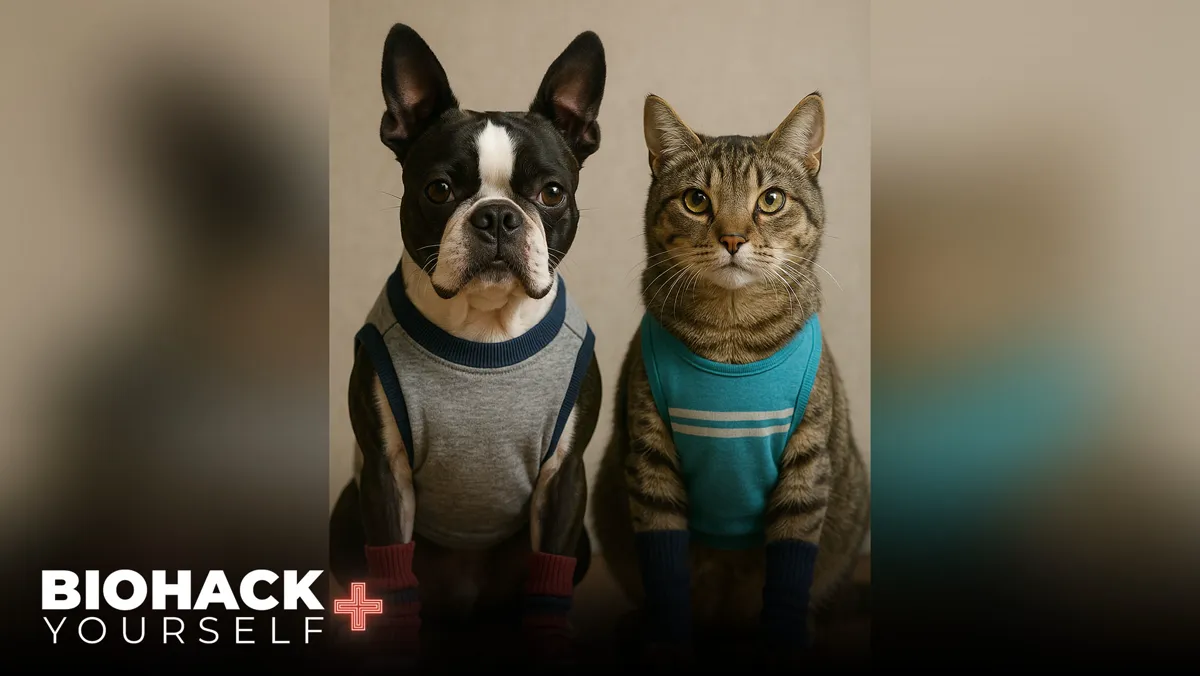
Biohacking Pets: Increasing Dog Lifespan and Cat Lifespan
Advancements That May Prolong Their Lifespan
Microplastics in Human Brain
The average human brain contains 7mg!
From misinformation to integrity
We love our pets like family, and often more consistently than some relatives! So, it’s no surprise that as interest in human longevity and biohacking grows, pet owners are starting to ask a powerful question: Can we do the same for our animals?
From optimizing nutrition to exploring fasting biology, many of the breakthroughs that support human healthspan are showing promise in extending dog lifespan and cat lifespan too. The goal? Not just more years, but better ones where our pets remain active, playful, and cognitively sharp deep into their senior years.
Let’s explore the science, the emerging tools, and the habits that might help your furry friend thrive.
Why Pet Longevity Is Gaining Attention
Most dogs live 10 to 13 years. Cats tend to reach 12 to 18, with some pushing past 20. But those numbers haven’t changed much in decades, despite advances in medicine. What has changed? Our understanding of cellular health.
Just like in humans, the primary drivers of aging in pets include:
Mitochondrial dysfunction
That means we may be able to translate the same longevity principles we apply to ourselves to benefit our pets through safer, species-specific adaptations.
1. Nutrition as a Foundation
Longevity starts at the bowl. A pet’s diet is more than just fuel—it’s the instruction manual for their cells. Emerging research points toward:
Higher protein, lower carb diets for metabolic stability
Omega-3s for joint and cognitive health
Controlled caloric intake to reduce age-related inflammation
Interestingly, calorie restriction has shown consistent benefits across species. In dogs, modest caloric restriction has been linked to a nearly two-year extension in lifespan a major gain in dog years.
Much like humans, what pets eat (and how much) can signal their biology to switch from growth mode to repair mode.
Longevity Starts at the Bowl
Balanced nutrition & smarter feeding habits may extend your pet’s healthspan.
2. Fasting and Time-Restricted Feeding for Pets
While most pets are grazers by habit, there’s growing interest in time-restricted feeding (TRF). TRF mimics aspects of fasting biology, promoting cellular renewal and better insulin sensitivity.
In veterinary studies, dogs that ate once daily, not free-fed, showed improved cognition, lean muscle maintenance, and reduced inflammation.
Just as we use fasting to trigger autophagy, repair, and NAD+ upregulation, some veterinarians believe similar responses could benefit pets when applied carefully and under supervision.
And while you won’t find pets sipping green juice on a detox cleanse, the concept of metabolic cycling, feast and fast, is starting to reshape how longevity-minded pet owners feed.
3. Supplements: What’s Safe and What’s Hype
Not every human supplement translates to animal use. That said, some compounds are being explored for their potential to improve healthspan in dogs and cats:
Antioxidants: Like CoQ10 and vitamin E, to protect mitochondrial integrity
Adaptogens: Like ashwagandha or turmeric (when properly dosed)
Joint support: Glucosamine and chondroitin are widely accepted for aging pets
NAD+ boosters, senolytics, and fasting mimetics like Mimio are designed for human biology, but the mechanisms they target (like autophagy and inflammation control) are relevant across species. While Mimio isn’t exclusively formulated for pets (...yet), the science behind it is inspiring a wave of research into how we might biohack aging in animals down the line.
4. Exercise, Enrichment, and Neuroplasticity
Movement is medicine, for us and for them!
Daily walks, play sessions, agility training, and problem-solving games aren’t just cute—they’re critical for neuroplasticity and emotional health in pets. Active pets have better circulation, healthier joints, and more stable moods.
Even short play sessions help lower cortisol levels and boost serotonin. Think of this as the animal version of movement-based mindfulness.
For aging pets, maintaining a routine and introducing low-impact challenges can help preserve muscle and delay cognitive decline—similar to how resistance training protects human longevity.
5. Sleep, Circadian Health, and Environmental Stress
Pets thrive on routine, and like us, they’re sensitive to circadian cues. Poor sleep, late feeding times, and chaotic environments can disrupt hormone balance and cellular repair.